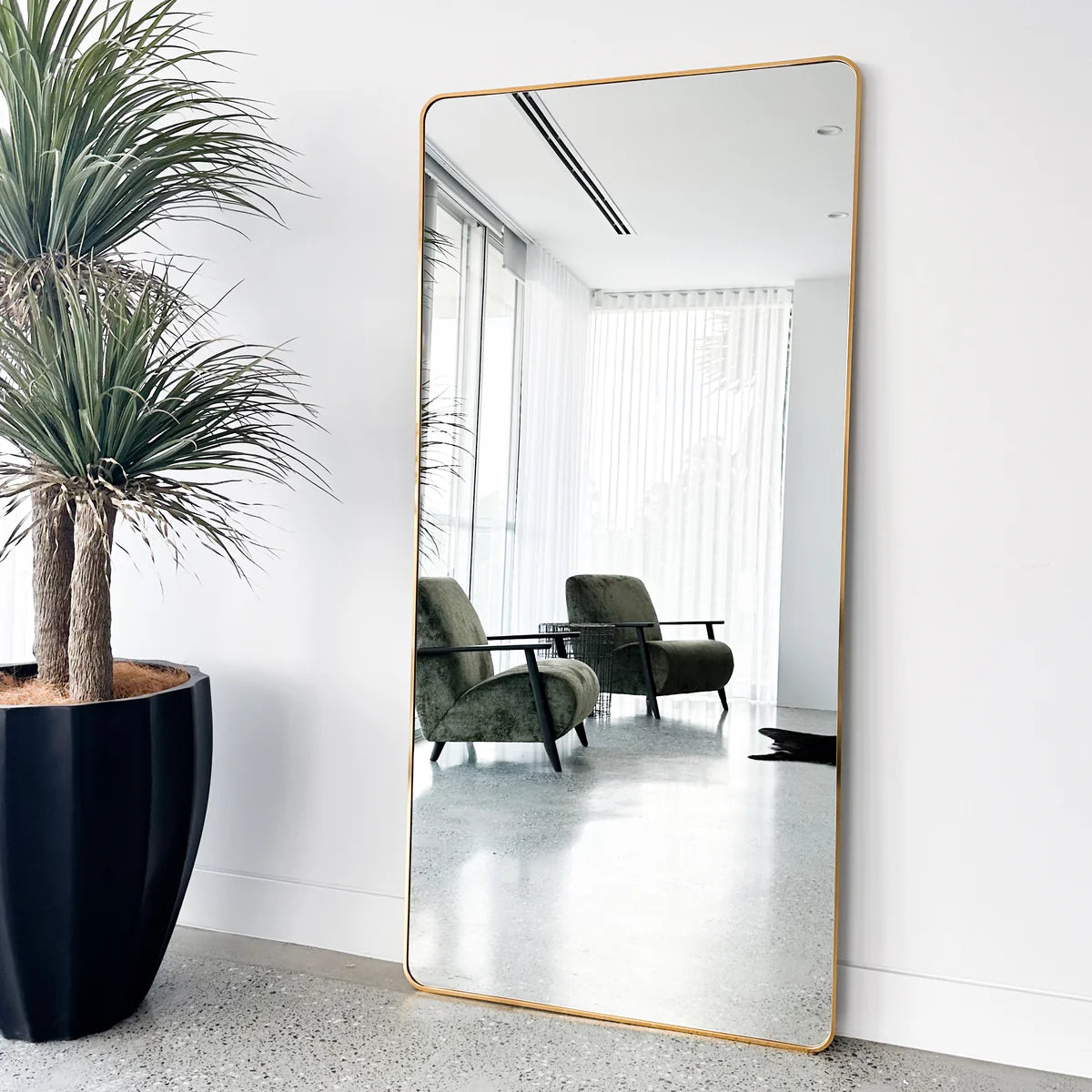
A bedroom mirror should be practical enough for everyday use while also feeling considered within the rest of the room. Size, shape, placement and frame finish can all change whether a mirror simply fills an empty wall or becomes an intentional part of your bedroom design.
For most bedrooms, the first decision is whether you need a full length mirror for getting dressed, a decorative wall mirror, or something that provides both function and a statement feature.
This guide covers how to choose the right bedroom mirror, where to position it and how different shapes work with your furniture and interior style. Explore our collection of Bedroom Mirrors to compare different sizes and designs.
What Type of Mirror Is Best for a Bedroom?
For most bedrooms, a full length mirror provides the greatest everyday functionality.
It gives you enough reflective area to see an entire outfit while also having the scale to become part of the room's design.
However, the best mirror depends on the space available.
A large floor mirror works well against an open wall, while a narrower full length mirror can fit beside a wardrobe or between furniture. Smaller wall mirrors can work above dressing tables and drawers where a full-body reflection isn't required.
Where Should a Mirror Go in a Bedroom?
Start with how you'll actually use the mirror.
If it's primarily for getting dressed, positioning it near your wardrobe usually makes the most sense. Make sure there's enough unobstructed space in front of the mirror to step backwards and comfortably see your full reflection.
Then consider what the mirror will reflect.
A bedroom mirror facing a window, open part of the room or attractive furniture can add visual depth. One positioned directly opposite clutter, open storage or a television may make the room feel busier.
The best position therefore isn't always the biggest empty wall.
Should a Bedroom Mirror Face a Window?
Positioning a mirror opposite or adjacent to a window can work particularly well in bedrooms with limited natural light.
A mirror doesn't create additional light, but it can reflect the brighter parts of your room.
Larger bedroom mirrors have an advantage here because their greater reflective area captures more of the surrounding space.
Consider the view as well as the light. If the mirror reflects greenery, an open part of the room or an attractive interior feature, the reflection itself becomes part of the bedroom styling.
Can a Large Mirror Work in a Small Bedroom?
Yes. A large mirror doesn't necessarily make a small bedroom feel crowded.
In fact, one large reflective surface can sometimes create a cleaner result than filling the same wall with several smaller decorative pieces.
The key is choosing a design with appropriate visual weight.
Slim frames, simple shapes and frameless mirrors can provide substantial scale without making the wall feel heavy.
If floor space is particularly limited, wall mounting a full length mirror can provide the same reflective area while keeping the floor underneath it clear.
What Size Bedroom Mirror Should You Choose?
The size should relate to both the available wall and surrounding furniture.
For a practical full-body reflection, mirrors around 160–180cm tall work well in many bedrooms.
Moving towards 180–200cm creates more of a statement, while oversized mirrors can work particularly well in larger bedrooms with high ceilings and open walls.
Width matters too.
A narrow bedroom mirror is easier to position beside wardrobes and doors, while a wider mirror reflects more of the room and has significantly more visual presence.
Measure both dimensions before deciding.
What Shape Mirror Is Best for a Bedroom?
The shape you choose can either repeat the architectural lines already present in the bedroom or deliberately contrast with them.
Bedrooms contain a lot of rectangles — beds, bedside tables, wardrobes, windows and doors.
Introducing a different mirror shape can therefore make a surprisingly large difference.
Organic Bedroom Mirrors
Organic and irregular mirrors work well when you want your bedroom mirror to feel more like a piece of functional art.
Instead of introducing decoration through a detailed frame, the shape of the mirror itself creates the visual interest.
The Odessa Irregular Full Length Mirror is a good example. Its full-length proportions make it practical for dressing, while the asymmetric silhouette provides a softer alternative to a traditional rectangle.
An irregular mirror works particularly well in a bedroom where the surrounding furniture is relatively simple. The contrast allows the mirror to become a feature without needing additional decorative pieces around it.
Rectangle Bedroom Mirrors
A rectangle is the most versatile option if you prefer clean lines.
The Bella Minimal Floor Mirror provides a more structured look, making it particularly suited to minimalist and contemporary bedrooms.
Rectangle mirrors also work well when positioned alongside wardrobes because their straight edges naturally align with surrounding cabinetry.
If your bedroom already contains curved furniture or lots of decorative shapes, the simplicity of a rectangle can help create balance.
Arch Bedroom Mirrors
An arch sits between the simplicity of a rectangle and the more expressive shape of an irregular mirror.
The straight sides maintain clean proportions while the curved top introduces softness.
The Louve Black Arch Mirror is a good example of using a simple arch silhouette to break up the straight lines found throughout a bedroom.
This works particularly well with upholstered beds, neutral interiors and bedrooms where you want the mirror to feel architectural rather than decorative.
Should You Choose an Arch, Rectangle or Irregular Bedroom Mirror?
Think about how much attention you want the mirror to receive.
Choose a rectangle mirror when you want something clean, understated and easy to coordinate.
Choose an arch mirror when you want to soften the room while maintaining a symmetrical shape.
Choose an irregular mirror when you want the mirror itself to become a stronger design feature.
There's no universally better shape. The goal is to create the right amount of contrast with the furniture and architecture already present.
Should You Lean or Hang a Bedroom Mirror?
Both approaches work particularly well in bedrooms.
Leaning Bedroom Mirrors
A leaning full length mirror creates a relaxed, contemporary appearance.
Because bedrooms generally have lower foot traffic than entryways and hallways, they can be particularly suited to large leaning mirrors.
The mirror begins to feel like another piece of furniture rather than simply something attached to the wall.
Keep the mirror relatively upright for a natural viewing angle and appropriately secure larger designs to reduce the risk of tipping.
Wall-Mounted Bedroom Mirrors
Wall mounting creates a cleaner finish and keeps the floor underneath the mirror clear.
This can be particularly useful in smaller bedrooms where every section of usable floor space matters.
Wall mounting also works well when positioning a mirror between wardrobes, beside furniture or in narrower areas where a leaning mirror would project too far into the room.
What Should You Put Next to a Bedroom Mirror?
You don't necessarily need to style anything beside it.
A large bedroom mirror can provide enough visual impact on its own.
If you do want to add something, consider pieces that have a practical relationship with the area.
An occasional chair can create a small dressing area. A plant can introduce an organic shape beside a structured mirror. A low piece of furniture can help anchor a tall mirror visually.
Avoid automatically filling every gap around the mirror with small decorative objects.
Sometimes leaving negative space around a statement mirror creates the more considered result.
What Colour Frame Is Best for a Bedroom Mirror?
Look at the finishes already present rather than choosing the mirror colour independently.
Black Bedroom Mirrors
Black creates the strongest outline and works particularly well against white, cream and neutral bedroom walls.
A black frame can connect with lighting, furniture legs, window frames or other darker details throughout the room.
Gold Bedroom Mirrors
Brushed gold introduces warmth and works particularly well with cream, beige, warm white, timber, linen and warmer textiles.
A slim gold frame can add warmth without making the bedroom feel overly decorative.
Silver Bedroom Mirrors
Silver provides a cooler and more understated option.
Because the frame visually sits closer to the reflective glass, it can make a larger mirror feel lighter.
Wood Bedroom Mirrors
Wood introduces natural texture and works particularly well with warm contemporary, organic and coastal-inspired bedrooms.
The timber doesn't need to exactly match your furniture. Similar undertones are generally enough to make the materials feel connected.
How to Style a Bedroom Mirror With Your Bed
Your bed is usually the largest piece of furniture in the room, so consider how the mirror relates to it.
With an upholstered or curved bedhead, a simple rectangle mirror can provide useful contrast.
With a very structured bed and rectangular bedside tables, an arch or organic mirror can soften the overall composition.
You also don't need to centre everything.
A full length mirror positioned asymmetrically beside the bed or wardrobe can make the bedroom feel less formal while still appearing intentional.
Bedroom Mirrors for Minimal Interiors
For a minimal bedroom, focus on scale and proportion rather than decoration.
A large slim-framed or frameless mirror can provide a strong visual feature without requiring additional artwork around it.
Black creates greater definition, while silver and frameless designs tend to visually recede.
An arch can introduce a subtle curve without disrupting the simplicity of the room.
Bedroom Mirrors for Warm Neutral Interiors
Warm neutral bedrooms pair particularly well with softer mirror shapes.
Consider arches and organic silhouettes alongside beige, cream, warm white, linen and natural timber.
Black can provide contrast if the room needs definition, while brushed gold and timber maintain a warmer overall palette.
The mirror doesn't need to match every material. Instead, aim for a balance between the reflective glass and softer textures throughout the bedroom.
Bedroom Mirrors for Small Apartments
When space is limited, prioritise mirrors that perform more than one role.
A full length bedroom mirror gives you a practical dressing mirror while simultaneously adding visual depth to the room.
A narrower design can fit beside a wardrobe, while wall mounting can preserve floor space.
Larger mirrors can also work surprisingly well in compact apartments because the reflection visually extends the room rather than introducing another solid piece of furniture.
How to Choose the Right Bedroom Mirror
Start with function.
If you'll use the mirror for getting dressed every day, prioritise a full length design and make sure there's enough viewing distance in front of it.
Then consider the room itself.
Choose a rectangle if you want clean geometry, an arch if the bedroom needs softer lines, or an irregular mirror if you want something more expressive.
Next, consider scale and frame finish.
Finally, decide whether leaning or wall mounting works better with your available floor space.
The best bedroom mirror should provide a useful reflection while also feeling like an intentional part of the room.
Explore our Bedroom Mirrors to find a design suited to your bedroom size, furniture and interior style.