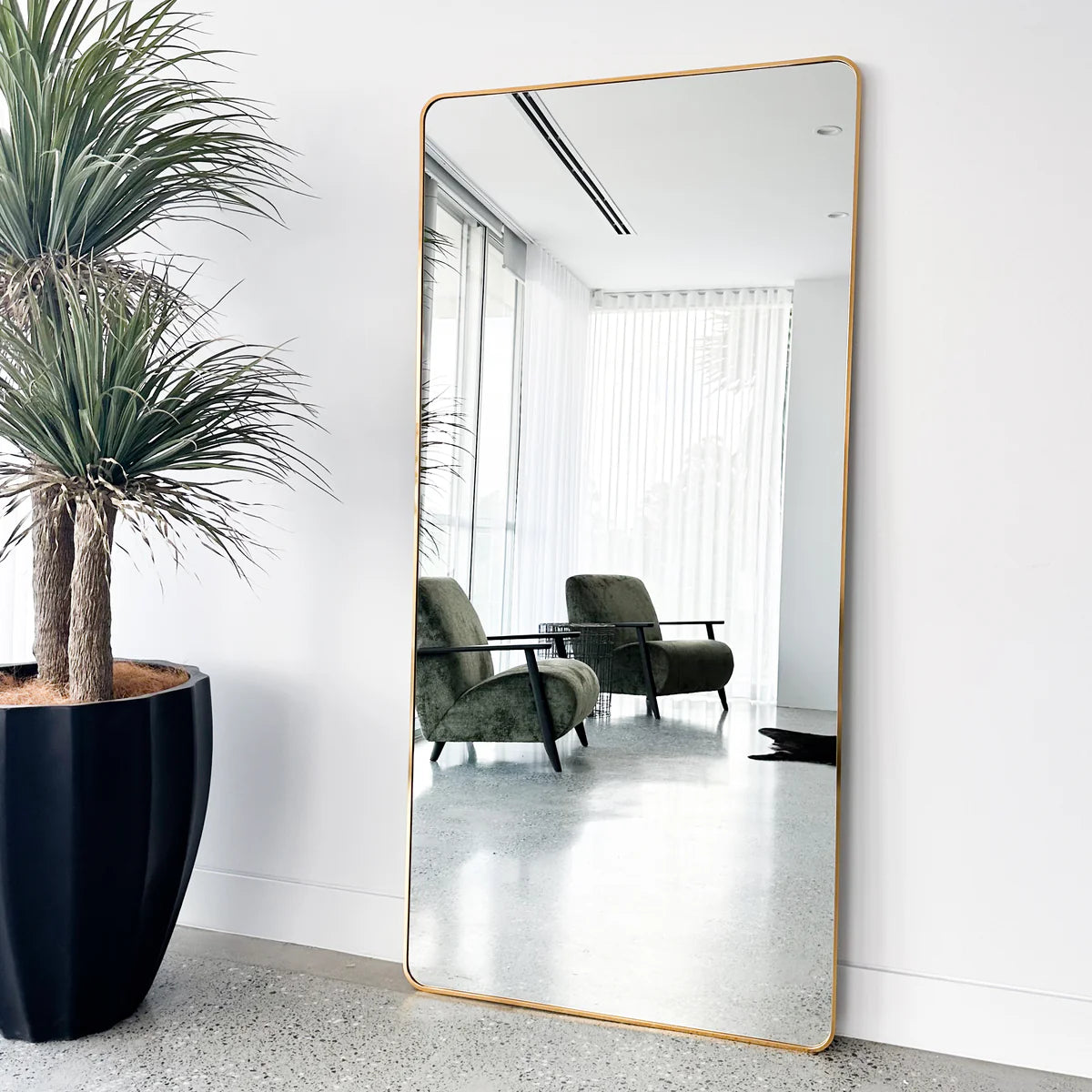
Frameless Mirrors: How to Choose & Style a Frameless Mirror
A frameless mirror is one of the easiest ways to introduce a mirror into an interior without adding another colour, material or heavy frame to the room. Instead, the shape and reflective glass become the design.
From clean rectangular wall mirrors to arches, circles and organic shapes, frameless mirrors can work across bathrooms, bedrooms, entryways and living spaces. They're particularly useful in modern interiors where you want a mirror to feel light, minimal and integrated into the room.
This guide covers the different frameless mirror shapes, where they work best, how to style them and what to consider before choosing one. Explore our complete collection of Frameless Mirrors to compare different designs and sizes.
Why Choose a Frameless Mirror?
The biggest advantage of a frameless mirror is its visual simplicity.
Without a prominent border around the glass, there's less competition with your furniture, cabinetry, tapware and other finishes already present in the room.
This can be particularly useful when an interior already contains several materials. Instead of deciding whether your mirror should have a black, gold, silver or timber frame, a frameless design works primarily through its shape and scale.
That doesn't mean frameless mirrors have to disappear into the room. An oversized or unusually shaped frameless mirror can become one of its strongest features.
Are Frameless Mirrors Still in Style?
Frameless mirrors work particularly well with the move towards cleaner interiors where shape, texture and material provide interest instead of excessive decoration.
The design is also difficult to tie to one particular trend.
A simple rectangular piece of mirror glass is inherently minimal, while curved and irregular frameless mirrors can feel much more contemporary.
This makes frameless mirrors adaptable. Furniture, wall colours and other finishes can change around them without necessarily making the mirror feel dated.
What Shape Frameless Mirror Should You Choose?
Without a frame, shape becomes much more important.
The best option depends on whether you want the mirror to blend into the architecture or become a feature.
Frameless Rectangle Mirrors
A rectangle creates the cleanest and most structured appearance.
Straight edges work particularly well above bathroom vanities, alongside cabinetry or in minimalist spaces where you want the mirror to align with other architectural elements.
Frameless Arch Mirrors
An arch introduces softness without requiring a decorative frame.
This works particularly well when a room contains lots of straight lines from doors, cabinetry, wardrobes and furniture.
The result remains minimal, but the curved top gives the mirror more architectural character.
Frameless Round Mirrors
Round mirrors create an even softer shape.
They work particularly well above vanities and consoles where the circle contrasts against rectangular furniture underneath.
Frameless Organic & Irregular Mirrors
Organic mirrors take the opposite approach.
Instead of making the frame decorative, the glass itself becomes the statement.
The Aria Organic Frameless Mirror is an example of using an asymmetrical silhouette to create visual interest while keeping the material itself extremely simple.
Frameless Mirrors vs Framed Mirrors: Which Is Better?
Neither is inherently better. They solve different interior-design problems.
A framed mirror introduces another material or colour into the room. This can be useful when you want to repeat black, gold, silver or timber details already present elsewhere.
A frameless mirror removes that additional element.
Choose frameless when you want something visually lighter, when your interior already contains several finishes or when you want the shape of the glass to provide the design.
Choose framed when you want stronger definition between the mirror and wall or want the frame colour to become part of the interior palette.
Do Frameless Mirrors Make a Room Look Bigger?
Mirrors can create the perception of additional space because they reflect the surrounding room and extend your visual sightline.
Frameless mirrors can be particularly effective because there's no strong border visually separating the reflection from the wall.
A larger frameless mirror can therefore create a substantial reflective surface without introducing the visual weight of an oversized frame.
This can work particularly well in apartments, narrow entryways, smaller bedrooms and compact bathrooms.
Are Frameless Mirrors Good for Small Rooms?
Yes.
When space is limited, adding another heavy decorative element can sometimes make a room feel busier.
A frameless mirror provides function and reflection without introducing another prominent material.
You don't necessarily need to choose a small mirror either.
A large frameless mirror can reflect considerably more of the room while still maintaining a relatively light appearance.
In some spaces, one large frameless mirror can actually feel cleaner than several smaller pieces of wall décor.
Are Frameless Mirrors Good for Bathrooms?
Frameless mirrors can work particularly well in bathrooms because their clean edges pair naturally with cabinetry, stone, tiles and tapware.
They also remove the need to match a mirror frame with every other finish in the bathroom.
A rectangular design provides a clean architectural look, while round, arch and organic shapes can soften the straight lines of a vanity and surrounding tiles.
However, suitability depends on the individual mirror. Always check the product specifications before installing a particular mirror in a bathroom or other moisture-prone area.
What Frameless Mirror Works Best Above a Vanity?
Start with the proportions of the vanity.
A rectangular mirror can follow the width and geometry of the cabinetry, creating a clean and structured result.
A round or arch mirror introduces contrast against the rectangular vanity underneath.
An irregular mirror creates a more contemporary look and can make the mirror itself one of the main design features of the bathroom.
There's no rule that the mirror needs to be exactly the same width as the vanity. The important consideration is making the proportions feel intentional rather than undersized or oversized by accident.
Are Irregular Frameless Mirrors Too Trendy?
Organic and irregular mirrors are more expressive than traditional rectangles, but that doesn't automatically mean they'll date quickly.
The key difference is where the visual interest comes from.
A heavily decorative mirror relies on ornamentation, while an irregular frameless mirror still uses an extremely simple material palette — essentially glass and shape.
The Stella Frameless Mirror offers a more restrained frameless alternative if you prefer cleaner geometry.
If you're uncertain, think about the rest of your interior.
An irregular mirror can work particularly well when everything else in the room is relatively simple because it provides contrast without requiring additional colour or decoration.
What Should You Pair With a Frameless Mirror?
Because frameless mirrors don't introduce another frame finish, you have considerable flexibility with surrounding materials.
Natural Timber
Timber furniture or cabinetry introduces warmth against the reflective glass.
This combination works particularly well in bedrooms, bathrooms and warm minimalist interiors.
Stone
Travertine, marble and other stone surfaces pair naturally with frameless mirrors because the absence of a frame allows the texture of the stone to remain prominent.
Black Details
Black tapware, lighting or furniture can provide definition around a frameless mirror without requiring the mirror itself to have a black border.
Warm Neutrals
Cream, beige, warm white and textured fabrics can soften the cooler reflective surface of mirror glass.
How Do You Style a Frameless Mirror Without It Looking Plain?
The solution isn't necessarily adding more décor around it.
Instead, use scale, shape and positioning.
A large frameless mirror has considerably more impact than a small one, even though the material remains identical.
An irregular or arch shape can introduce interest without requiring decorative framing.
And positioning the mirror where it reflects something visually appealing — natural light, greenery, furniture or an open section of the room — makes the reflection itself part of the styling.
Where Should You Put a Frameless Mirror?
Bathroom
Position the mirror above your vanity and consider how its shape interacts with the cabinetry below.
Straight cabinetry paired with a curved or irregular mirror can create useful contrast.
Bedroom
A larger frameless mirror can work as a dressing mirror without introducing another frame colour into the room.
This can be particularly useful if your bedroom already contains several timber or metal finishes.
Entryway
A frameless wall mirror above a console creates a functional entrance while keeping the area visually light.
Living Room
Use a larger or more unusually shaped frameless mirror where it can reflect an attractive part of your interior.
The mirror can act almost like wall art while remaining functional.
Should You Choose a Polished or Bevelled Edge?
Edge treatment can subtly change the appearance of a frameless mirror.
A flat polished edge creates the cleanest and most minimal finish. The glass simply ends with a smooth, finished edge.
A bevelled mirror introduces an angled border around the glass. This catches light differently and adds additional detail without requiring a separate frame.
Choose polished edges for a more contemporary, understated appearance.
Choose bevelled edges when you want a little more detail while retaining the frameless look.
Can Frameless Mirrors Work in Warm Interiors?
Absolutely.
A frameless mirror doesn't have to create a cold or clinical appearance.
The surrounding materials determine much of the overall feeling.
Pair reflective glass with timber, linen, textured upholstery, warm whites, stone and softer lighting to create a warmer interior.
Curved and organic frameless shapes can also soften the harder geometry typically associated with traditional mirror glass.
Frameless Mirror vs Minimalist Mirror
There's considerable overlap between the two.
A frameless mirror is naturally minimal because it removes the decorative frame, but minimalist mirrors can still have slim black, gold, silver or timber frames.
Choose frameless when you want the glass itself to become the primary material.
Choose a slim framed mirror when you want a little more definition between the mirror and surrounding wall.
How to Choose the Right Frameless Mirror
Start with the room and decide whether you want the mirror to blend in or stand out.
For something understated, choose a simple rectangle, arch or round design.
For more impact, consider a larger organic or irregular shape where the silhouette becomes the main feature.
Next, consider scale. Don't automatically choose a small mirror because frameless designs are minimal. A larger mirror can create more depth and impact without adding the visual weight of a heavy frame.
Finally, think about what it will reflect. A mirror facing natural light, greenery or an open part of the room will generally contribute more to your interior than one reflecting clutter or storage.
Explore our Frameless Mirrors to compare different shapes, sizes and styles.