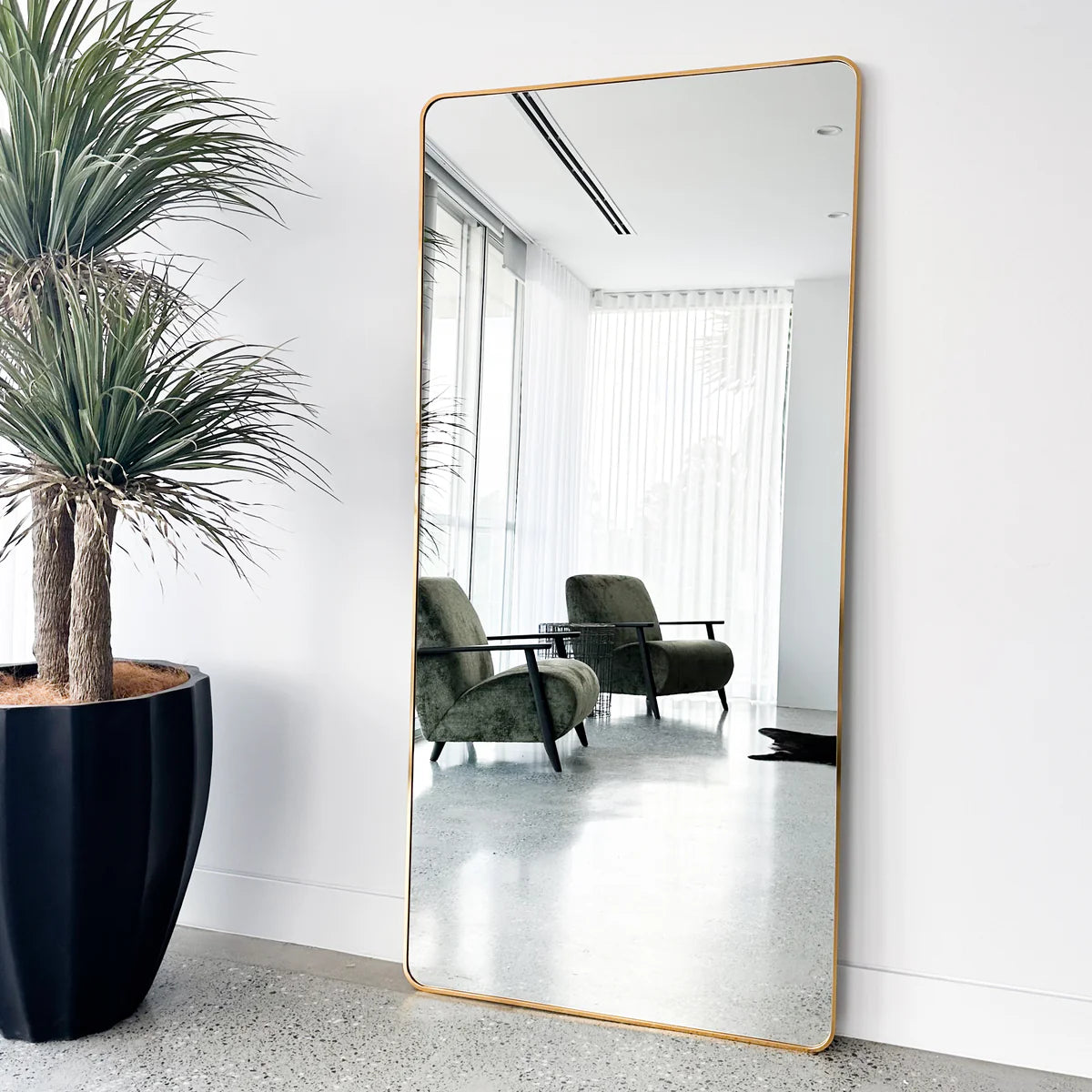
Full Length Mirrors: How to Choose the Right Size, Shape & Style for Your Space
A full length mirror is one of the most practical pieces you can add to a bedroom, dressing area or living space, but choosing the right one involves more than finding a mirror tall enough to see your entire outfit.
The size of the mirror, its width, shape, frame colour and position all affect how it looks within a room. You also need to decide whether you want a leaning floor mirror or wall-mounted full length mirror, and whether the mirror should blend into your interior or become a statement piece.
This guide covers what to consider before buying a full length mirror and how to choose a design that works with your space. You can also explore our complete collection of Full Length Mirrors.
What Is a Full Length Mirror?
A full length mirror is designed to provide a head-to-toe reflection from a comfortable viewing distance.
Unlike smaller wall or vanity mirrors, full length designs are generally tall enough to be used when getting dressed while also having enough scale to become part of the interior itself.
You'll also see them described as floor mirrors, standing mirrors, body mirrors, tall mirrors and floor length mirrors. While these terms are often used interchangeably, the way the mirror is installed can differ.
Some full length mirrors are designed to lean against a wall, some can be wall mounted, and others are freestanding.
What Size Should a Full Length Mirror Be?
A full length mirror doesn't technically need to be as tall as you are to show your entire body. What matters is the relationship between the mirror's height, your viewing distance and its position.
For interior styling, however, larger mirrors often have another advantage: scale.
A mirror around 150–170cm tall can provide a practical full-body reflection while fitting into smaller spaces.
Mirrors around 180cm tall create more presence and work well in standard bedrooms and dressing areas.
Moving into 200cm and 220cm full length mirrors creates a much stronger statement and allows the mirror to visually hold its own alongside larger furniture and higher ceilings.
Before buying, measure both the available wall and the surrounding space rather than considering height alone.
Does the Width of a Full Length Mirror Matter?
Yes. Width is often overlooked when people shop for a full length mirror.
Two mirrors can both be 180cm tall but look completely different if one is 50cm wide and the other is 100cm wide.
A narrower mirror is useful when wall space is limited and can fit naturally between wardrobes, doors or furniture.
A wider large full length mirror captures considerably more of the surrounding room. This can create greater visual impact and makes the mirror feel more like an interior feature rather than simply somewhere to check your outfit.
What Shape Full Length Mirror Should You Choose?
Shape is one of the biggest differences between full length mirrors, and there isn't one design that's right for every room.
Arch Full Length Mirrors
An arch combines a tall, practical reflective area with a curved top.
The curve helps soften rooms dominated by straight architectural lines, making an arch particularly effective alongside rectangular wardrobes, consoles, doors and furniture.
Our Eve Full Length Arch Mirror is an example of this approach, combining a minimal frame with a large architectural arch.
Rectangle Full Length Mirrors
Rectangle mirrors provide the cleanest and most traditional full-length shape.
Their straight edges work particularly well in minimalist interiors or where you want the mirror to align with cabinetry and furniture.
The Cleo Minimal Rectangle Mirror uses this simpler geometry for a more structured alternative to an arch.
Irregular Full Length Mirrors
Irregular mirrors move further away from traditional mirror shapes.
Rather than simply functioning as a mirror, an organic or asymmetrical design can behave more like a piece of wall art.
The Odessa Irregular Full Length Mirror is better suited to interiors where you want the shape of the mirror itself to become a feature.
Frameless Full Length Mirrors
Removing the frame creates a lighter appearance and allows the shape of the glass to become the focus.
Frameless designs can work particularly well in smaller rooms or minimalist interiors where a heavy frame might introduce unnecessary visual weight.
Should a Full Length Mirror Be Leaning or Wall Mounted?
Both options work, but they create noticeably different results.
Leaning Full Length Mirrors
A leaning full length mirror creates a relaxed, contemporary appearance.
This style works particularly well with oversized mirrors because the mirror starts to behave more like a piece of furniture within the room.
Leaning can also make it easier to reposition your mirror when changing your furniture layout.
The angle matters, however. Leaning a mirror too far backwards changes the viewing angle, so keeping it relatively upright generally provides a more natural reflection.
Large leaning mirrors should also be appropriately secured to reduce the risk of tipping.
Wall-Mounted Full Length Mirrors
Wall mounting creates a cleaner, more architectural finish.
It keeps the floor underneath the mirror clear and can therefore be particularly useful in smaller bedrooms, narrow dressing areas and higher-traffic spaces.
A vertically mounted mirror also provides a straightforward viewing angle, which can make it preferable if the mirror will primarily be used for getting dressed.
Always follow the installation requirements for your individual mirror.
Where Should You Put a Full Length Mirror in a Bedroom?
The best location is somewhere that combines practical use with a good reflection.
Near your wardrobe or dressing area is usually the obvious starting point. Make sure there's enough room in front of the mirror to step backwards and see your entire outfit comfortably.
Then consider what appears behind you.
A mirror positioned where it reflects a window, an open part of the bedroom or an attractive piece of furniture can add considerably more to the room than one facing clutter or storage.
If possible, think about what the mirror sees, not just the empty wall it fills.
Can a Full Length Mirror Make a Small Room Look Bigger?
A mirror doesn't physically increase the size of a room, but it can change how spacious that room feels.
Large mirrors reflect more of the surrounding interior, creating additional visual depth. This can be particularly effective in bedrooms, apartments, hallways and dressing areas where space is limited.
Positioning a mirror near or opposite a source of natural light can also reflect brighter areas back into the room.
This is one reason a large full length mirror can sometimes work surprisingly well in a small room. A large mirror doesn't necessarily make a small room feel crowded if the design itself is relatively minimal.
Can a Full Length Mirror Make a Dark Room Brighter?
A mirror can't generate light, but it can reflect the light already entering the room.
For that reason, placement can be just as important as size.
Look at where natural light enters your room during the day. Positioning a mirror opposite or adjacent to that area can allow it to reflect a brighter part of the interior.
A wider mirror also captures a larger field of view, which can help distribute reflected light across more of the room.
Black, Gold, Silver or Wood: Which Frame Should You Choose?
Frame colour changes how strongly the mirror stands out from the wall.
Black Full Length Mirrors
Black creates the strongest outline and works particularly well against white, cream and neutral walls.
It's also easy to connect with other black elements such as lighting, furniture legs, door hardware and window frames.
Gold Full Length Mirrors
Gold introduces warmth and makes the frame itself slightly more decorative.
Brushed gold works particularly well alongside cream, beige, warm whites, natural timber, stone and other warmer materials.
Silver Full Length Mirrors
Silver generally creates a cooler and more understated appearance.
Because the frame is closer in colour to the reflective glass, it can visually recede and allow the size and shape of the mirror to become the focus.
Wood Full Length Mirrors
Wood introduces natural texture and generally creates a warmer, softer appearance than metal.
Timber frames work particularly well in organic, coastal, warm contemporary and neutral interiors.
Should Your Full Length Mirror Match Your Furniture?
Not necessarily.
Matching every finish in a room can actually make an interior feel overly coordinated.
Instead, look for connections.
A black mirror might repeat the black legs of a chair or light fitting. A brushed gold frame might connect with smaller metallic details. A wood mirror might introduce a similar tone to your dining table or cabinetry without matching it exactly.
Shape can work through contrast as well.
An arch mirror surrounded by rectangular furniture can introduce softness, while an irregular mirror can break up a highly symmetrical room.
Full Length Mirror vs Floor Mirror: What's the Difference?
These terms overlap, but they describe slightly different characteristics.
Full length mirror generally describes the function: a mirror large enough to provide a full-body reflection.
Floor mirror generally describes its size or positioning: a larger mirror designed to sit at or near floor level.
A mirror can therefore be both.
Many large arch and rectangle designs are simultaneously full length mirrors, floor mirrors and leaning mirrors depending on how they're installed.
Full Length Mirror vs Standing Mirror
A standing mirror traditionally refers to a mirror supported by its own stand or frame rather than being attached to a wall.
However, the term is also commonly used when searching for any tall mirror positioned at floor level.
If you specifically need a freestanding design, check the individual product specifications rather than assuming every full length mirror can stand unsupported.
How Do You Style a Full Length Mirror?
The easiest approach is to treat a large mirror as part of the furniture arrangement rather than an isolated accessory.
Minimal Bedroom
Choose a slim rectangle, arch or frameless design and allow some negative space around the mirror.
Avoid surrounding it with too many smaller decorative objects.
Warm Neutral Bedroom
Pair a brushed gold or wood full length mirror with linen, warm whites, beige, natural timber and textured fabrics.
Contemporary Living Room
Use a wider or oversized mirror where it can reflect a visually interesting part of the room.
A lounge chair, low console, side table or indoor greenery can help integrate the mirror into the surrounding furniture.
Dressing Area
Prioritise function.
Position the mirror where you have enough distance to see your complete reflection and where wardrobes or doors won't constantly obstruct it.
When Should You Choose an Oversized Full Length Mirror?
An oversized mirror makes sense when you have a large wall, higher ceilings or furniture that would visually overpower a smaller design.
It can also work in smaller rooms when the design is minimal and you want to maximise reflected space.
The important consideration is proportion.
A large mirror should look deliberately oversized rather than simply squeezed into the available wall.
Measure the height and width before ordering and consider leaving enough space around the mirror for its silhouette to remain visible.
How to Choose the Right Full Length Mirror
Start with function.
Decide whether you primarily need a dressing mirror, an interior statement piece or both.
Then measure your available space and decide whether you prefer a narrower practical mirror or a wider design that reflects more of the room.
Next, consider shape. Choose an arch for softer architectural lines, a rectangle for simplicity, or an irregular design when you want something more expressive.
Finally, choose your frame and installation style based on the room itself rather than looking at the mirror in isolation.
The right full length mirror should feel like it belongs within the proportions and materials already present in your interior.
Explore our complete range of Full Length Mirrors to compare different sizes, shapes, finishes and designs.
Frequently Asked Questions About Full Length Mirrors
How tall should a full length mirror be?
A full length mirror doesn't need to be exactly as tall as you are to show your complete reflection. For interiors, designs around 160–200cm and above are popular because they combine practical full-body viewing with enough scale to work as a design feature.
Is a wider full length mirror better?
A wider mirror reflects more of the surrounding room and generally creates greater visual impact. Narrow mirrors are useful when wall space is limited, so the best width depends on your available space and how you intend to use the mirror.
Where is the best place for a full length mirror?
Bedrooms, dressing areas, wardrobes, hallways and living spaces can all work. Choose somewhere with enough viewing distance and consider what the mirror will reflect when deciding on its final position.
Should a full length mirror touch the floor?
Not necessarily. Leaning floor mirrors commonly begin at floor level, while wall-mounted full length mirrors can be positioned slightly above it. The correct height depends on the mirror dimensions and how it will be used.
Is it safe to lean a full length mirror against the wall?
Some large mirrors are designed to be styled in a leaning position, but they should still be appropriately secured to reduce the risk of slipping or tipping. Follow the installation instructions provided for your specific mirror.
What shape full length mirror makes a room look bigger?
The overall reflective surface and positioning generally matter more than the shape. A wide full length mirror reflects more of the surrounding room, while placing it where it captures natural light or an open area can increase the sense of depth.