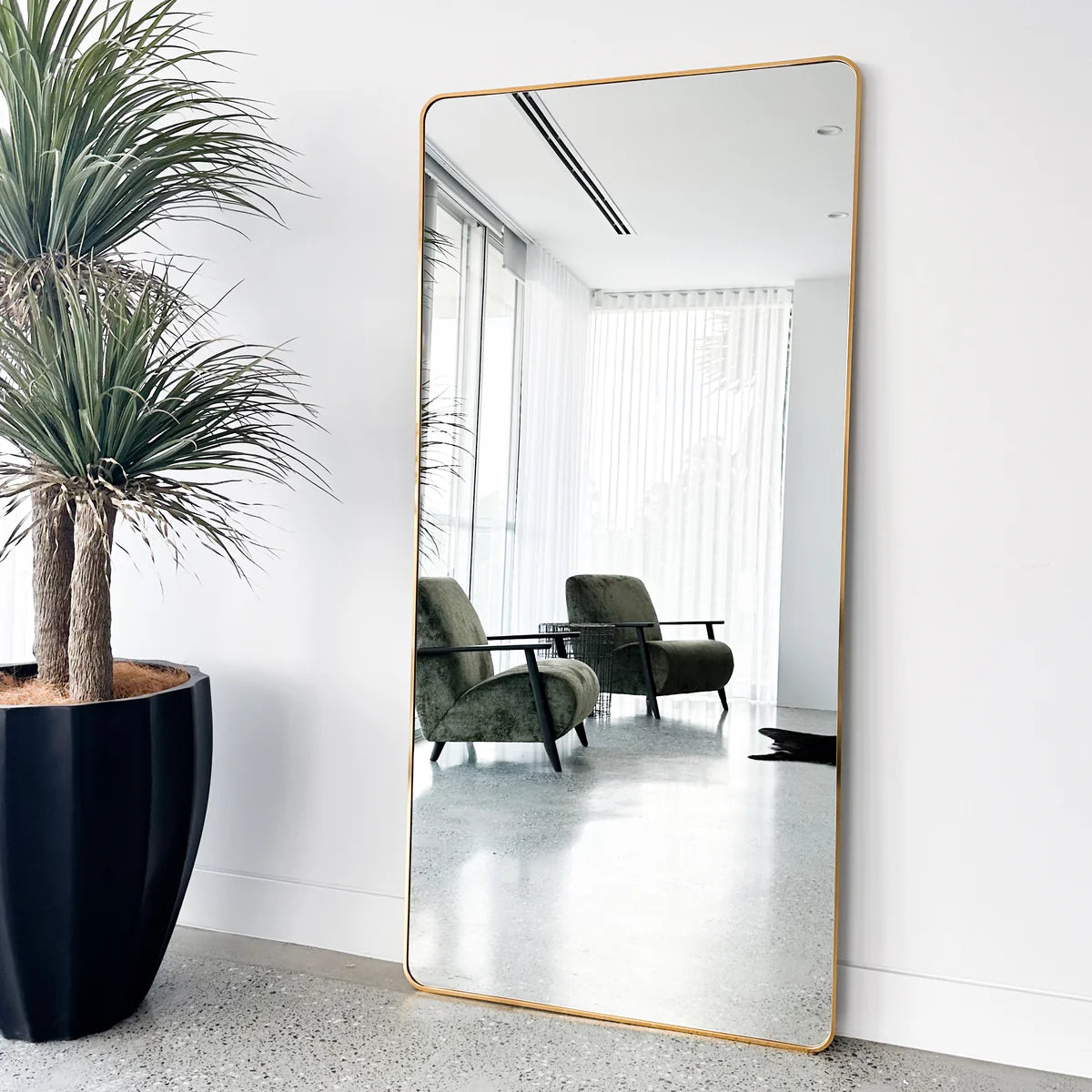
A large wall mirror can completely change the proportions of a room. Unlike a smaller decorative mirror, a large design reflects more of the surrounding interior, creates greater visual depth and can become a statement feature in its own right.
But bigger doesn't automatically mean better. The width of your wall, surrounding furniture, ceiling height, mirror shape and what appears in the reflection all influence which mirror will work best.
This guide covers how to choose and position a large wall mirror for bedrooms, living rooms, dining rooms and entryways. Explore our collection of Large Mirrors to compare different shapes, sizes and finishes.
Why Choose a Large Wall Mirror?
A large wall mirror performs several roles at once.
It provides a practical reflective surface, fills a substantial section of empty wall and can create the perception of additional depth within a room.
This makes large mirrors particularly useful when you have a blank wall that feels unfinished but don't necessarily want to introduce more furniture or a gallery of artwork.
One substantial mirror can often create a cleaner result than several smaller decorative pieces.
Do Large Wall Mirrors Make a Room Look Bigger?
A mirror can't physically increase the dimensions of your room, but it can change how spacious the room feels.
The reflection extends your visual sightline beyond the wall. A larger mirror reflects more of the surrounding interior, increasing this effect.
This is particularly useful in smaller living rooms, apartments, dining areas and narrow entryways.
Placement matters just as much as size. A large mirror reflecting an open area will generally create a greater feeling of depth than one positioned directly opposite another nearby wall.

Can a Large Mirror Make a Dark Room Brighter?
A mirror can't generate light, but it can reflect existing light.
Look at where natural light enters your room throughout the day.
Positioning a large wall mirror opposite or adjacent to a window can allow the mirror to reflect a brighter section of the room.
The width of a large mirror also means it can capture considerably more of the surrounding space than a small decorative mirror.
For darker interiors, think about both where the light comes from and what the mirror will reflect before deciding where to hang it.
What Size Should a Large Wall Mirror Be?
Start by measuring the wall and any furniture positioned underneath or beside it.
There isn't one correct size because a mirror designed to sit above a console has very different requirements from an oversized mirror occupying an entire open wall.
The goal is proportion.
A mirror that's too small can look isolated on a large wall, while an oversized mirror squeezed between furniture can make the arrangement feel crowded.
Leave enough negative space around the mirror for its shape to remain visible.
How Big Should a Mirror Be Above a Console?
Rather than following one strict measurement rule, look at the relationship between the mirror and console.
A very narrow mirror above a wide console can look disconnected. Likewise, a mirror extending substantially beyond both sides of the furniture can make the proportions feel top-heavy.
The mirror should generally feel visually connected to the furniture underneath it.
Shape matters too.
A round or organic mirror can contrast with the straight horizontal line of a console, while a rectangular mirror creates a more structured arrangement.
How Big Should a Mirror Be Above a Sofa?
A large mirror can work extremely well above a sofa, particularly when you want something more functional and reflective than traditional artwork.
Consider the overall width of the sofa and the available wall above it.
The mirror needs enough scale to relate to such a large piece of furniture without appearing lost.
Also consider height. You want the mirror to feel visually connected to the sofa rather than floating high above it.
Most importantly, think about what will appear in the reflection when you're sitting in the room.
What Shape Large Wall Mirror Should You Choose?
Shape can completely change how a large mirror interacts with the architecture around it.
Large Rectangle Wall Mirrors
Rectangles create the cleanest and most structured appearance.
They work particularly well above consoles, alongside cabinetry and in minimalist interiors where straight edges complement the surrounding architecture.
The Cleo Minimal Rectangle Mirror is a good example of using a slim frame and simple geometry to create scale without excessive detailing.
Large Arch Wall Mirrors
Arch mirrors introduce a curved element while maintaining symmetry.
They're particularly effective in rooms containing lots of straight lines from doors, windows, cabinetry and furniture.
An arch can make a large mirror feel softer without becoming overly decorative.
Large Organic & Irregular Wall Mirrors
Organic shapes make the mirror itself more of a feature.
The Aria Irregular Frameless Mirror uses the silhouette of the glass rather than an elaborate frame to create visual interest.
This approach works particularly well when the surrounding furniture and architecture are relatively simple.
Large Round Wall Mirrors
A large round mirror creates strong contrast against rectangular furniture.
This makes circles particularly effective above consoles, sideboards and vanities where almost every surrounding line is horizontal or vertical.
Large Wall Mirror vs Large Floor Mirror
Both can provide scale and visual depth, but they interact with the room differently.
A large wall mirror keeps the floor clear and can be positioned in relation to furniture underneath it.
This makes wall mirrors particularly useful above consoles, sideboards, vanities and furniture or in rooms where floor space is limited.
A large floor mirror extends closer to ground level and generally creates more of a full-length feature.
Choose based on whether you need a functional full-body reflection or a large reflective feature on the wall.
Where Should You Put a Large Wall Mirror in a Living Room?
Start by identifying what you want the mirror to achieve.
If the goal is to reflect more natural light, consider a position opposite or adjacent to windows.
If the goal is to fill a large blank wall, consider how the mirror relates to your sofa, console and other furniture.
If the mirror is primarily decorative, think carefully about the reflection itself.
A large mirror reflecting greenery, windows or an attractive part of the room can enhance the overall interior. One reflecting storage, a television or clutter may do the opposite.
Where Should You Put a Large Wall Mirror in a Dining Room?
Dining rooms are particularly well suited to larger mirrors because they often contain substantial areas of open wall.
A large mirror above a sideboard can create a clear focal point while maintaining floor space.
The reflection can also increase the sense of depth around the dining table.
Consider pendant lighting and windows when deciding on placement. A well-positioned mirror can reflect attractive lighting and other features already present within the room.
Can You Put a Large Wall Mirror in a Bedroom?
Absolutely.
A large wall-mounted mirror is particularly useful when you want substantial reflective area without sacrificing floor space.
Full-length wall mirrors can be positioned near wardrobes and dressing areas, while wider decorative mirrors can sit above drawers or other furniture.
For smaller bedrooms, wall mounting can also create a cleaner appearance than introducing another large object at floor level.
What Frame Colour Works Best for a Large Wall Mirror?
Because a large mirror occupies so much visual space, its frame can have a noticeable effect on the room.
Black Large Wall Mirrors
Black creates a strong outline.
It works particularly well against white, cream and neutral walls and can connect with darker lighting, window frames and furniture details.
Gold Large Wall Mirrors
Brushed gold introduces warmth and can make the mirror feel slightly more decorative.
It works naturally with warm whites, cream, beige, natural timber and stone.
Silver Large Wall Mirrors
Silver creates a more understated border.
Because the colour is closer to the reflective glass, it can make a large mirror feel visually lighter.
Frameless Large Wall Mirrors
Removing the frame entirely allows the shape and reflective glass to become the focus.
This can be particularly effective when you want a very large mirror without introducing another strong material or colour into the room.
Should a Large Wall Mirror Match Your Furniture?
It doesn't need to match exactly.
Instead, look for subtle connections between materials.
A black mirror might reference a black pendant light or furniture leg. A gold mirror might connect with smaller metallic details elsewhere in the room.
Shape can also provide intentional contrast.
A curved mirror above a rectangular console creates softness, while a rectangle can reinforce a more architectural interior.
The goal isn't necessarily matching — it's making the mirror feel connected to the rest of the space.
Are Oversized Wall Mirrors Too Much for Small Rooms?
Not necessarily.
One large mirror can actually be particularly effective in a smaller room because it creates a substantial reflective surface without taking up usable floor space.
A simple or frameless design can provide scale without introducing much visual weight.
In smaller rooms, the biggest consideration is usually what the oversized mirror reflects.
If it captures an open section of the room or natural light, it can increase the feeling of space. If it primarily reflects clutter, the effect can be less successful.
How High Should You Hang a Large Wall Mirror?
The correct height depends on the mirror and what's positioned underneath it.
A mirror above a console or sideboard should feel visually connected to that piece of furniture rather than floating separately on the wall.
For a standalone large mirror, consider the average viewing height and the overall proportions of the wall.
Before drilling, it can help to mark the mirror dimensions on the wall using removable tape. This allows you to see the proposed scale and position from across the room before committing to the installation.
How to Style Around a Large Wall Mirror
You don't necessarily need to surround a large mirror with additional décor.
Scale itself can provide enough visual interest.
If the mirror sits above a console, keep the styling underneath relatively restrained. A lamp, sculptural object, vase or greenery may be enough.
If it's mounted on an otherwise open wall, consider leaving negative space around it rather than filling every available gap.
The larger the mirror, the less additional decoration it generally needs.
How to Choose the Right Large Wall Mirror
Start with the wall.
Measure the available width and height and consider any furniture that will sit underneath or beside the mirror.
Next, decide how much attention you want the mirror to receive.
Choose a rectangle for clean architectural lines, an arch for softness, a round mirror for stronger contrast or an irregular shape when you want the mirror to become more of a statement feature.
Then consider the frame. Black provides definition, gold introduces warmth, silver is more understated and frameless designs keep the focus on shape and reflection.
Finally, look across the room and think about what the mirror will actually reflect.
The best large wall mirror doesn't simply fill an empty space. It works with the proportions, light and furniture already present in the room.