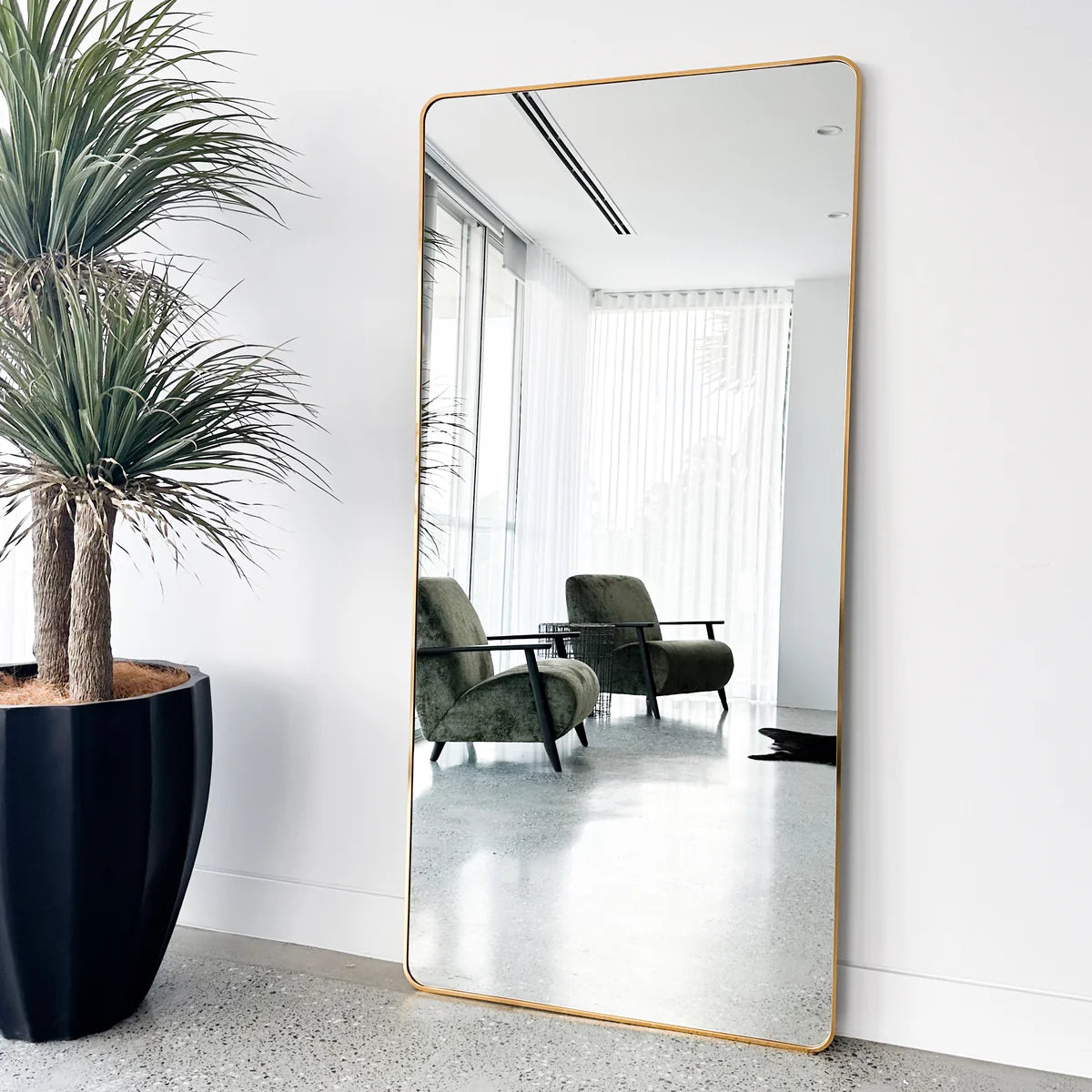
A floor mirror combines everyday function with the scale of a statement interior piece. Unlike smaller wall mirrors, floor mirrors extend closer to ground level and can reflect a much larger section of the room.
They're particularly suited to bedrooms, dressing areas and living spaces where you want a full-body mirror that also contributes to the décor.
From slim rectangular designs to oversized arches, here's why a floor mirror can be one of the most versatile additions to a modern interior.
Explore our Floor Mirrors to compare different shapes, sizes and finishes.

Why Choose a Floor Mirror?
The biggest advantage of a floor mirror is its scale.
A tall mirror provides a practical full-length reflection while creating vertical height within the room. Wider designs also reflect more of the surrounding interior, which can create a greater sense of depth.
Floor mirrors can also fill a large empty wall without requiring multiple pieces of artwork or décor.
One substantial mirror can be enough to anchor the space.
Floor Mirrors Create a Statement Without Adding Clutter
Modern interiors often work best with fewer, larger pieces rather than lots of small decorative objects.
A floor mirror fits naturally into this approach.
A simple oversized mirror can become the focal point of a bedroom or living room while maintaining a relatively minimal appearance.
The Bella Minimal Floor Mirror is a good example of using simple rectangular proportions to create impact through scale rather than decoration.
Can a Floor Mirror Make a Room Look Bigger?
A large floor mirror can create the perception of additional space by reflecting more of the surrounding room.
This can be particularly effective in smaller bedrooms and apartments.
Positioning your mirror opposite an open area can increase the feeling of depth, while placing it near a window can help reflect existing natural light throughout the room.
Think about the reflection itself. A mirror capturing greenery, furniture or an open section of the room will generally contribute more to the interior than one facing clutter.
Floor Mirrors Are Ideal for Bedrooms
Bedrooms are one of the most practical places for a floor mirror.
Positioning one near your wardrobe creates a dedicated dressing area with enough reflective space to comfortably see an entire outfit.
A floor mirror can also occupy an otherwise empty bedroom wall, combining the function of a dressing mirror with the visual impact of a decorative feature.
For softer interiors, the Eve Arch Full Length Mirror introduces a curved top that contrasts with rectangular beds, wardrobes and bedside tables.
Leaning Floor Mirrors Create a Relaxed Look
One of the defining looks associated with floor mirrors is the leaning mirror.
Leaning a large mirror against the wall creates a relaxed, contemporary appearance and allows the mirror to feel more like a piece of furniture.
It's particularly effective with oversized mirrors because the scale feels intentional.
Always check whether your individual mirror is designed for leaning and appropriately secure larger mirrors to reduce the risk of tipping.
What Shape Floor Mirror Works Best?
A rectangle floor mirror provides clean lines and works naturally in minimalist and contemporary interiors.
An arch floor mirror introduces curves and softens rooms dominated by straight furniture and architecture.
An irregular floor mirror creates more of an artistic feature, using its organic silhouette as part of the décor.
The best choice depends on whether you want your mirror to quietly complement the room or become one of its main features.
Why Choose a Floor Mirror Over a Wall Mirror?
A wall mirror is useful when floor space is limited or you want the mirror positioned above furniture.
A floor mirror generally creates more visual impact.
Its height connects the mirror with the furniture and floor around it, making it feel like part of the overall room rather than simply an object hanging on the wall.
For bedrooms and dressing areas, the larger proportions also provide a practical full-body reflection.
Choosing the Right Floor Mirror
Start with your available wall space and decide how much of a statement you want the mirror to make.
Choose a narrower design for tighter spaces or beside a wardrobe. For larger bedrooms and living rooms, consider a wider or oversized mirror that can anchor an open wall.
Then consider shape, frame colour and what the mirror will reflect.
A well-positioned floor mirror can provide everyday function while adding light, depth and scale to your interior.
Explore our Floor Mirrors to find the right design for your space.